


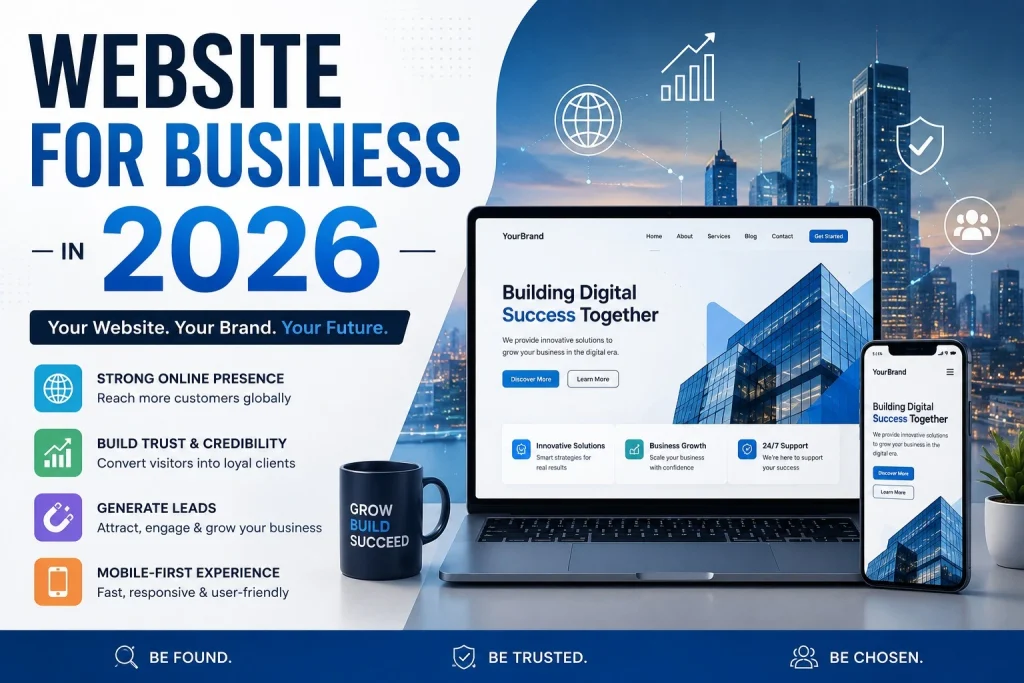
In the contemporary global economy, the traditional parameters of commerce have undergone a radical paradigm shift. Organizations no longer compete solely on the physical high street, nor do they hold monopolies based purely on regional pricing or product access. The modern marketplace is overwhelmingly digital, characterized by a hyper-connected consumer base that demands immediate visibility, absolute transparency, and frictionless accessibility. This transformation highlights the importance of a website as a critical digital asset for businesses seeking to establish credibility, connect with their target audience, and remain competitive in an increasingly online world.
In today’s digital world, running a business without a website is like keeping your store closed while expecting customers to find you. The importance of a website goes far beyond having an online presence—it helps customers discover your business, learn about your products or services, and build trust. Whether you serve a local community or a global market, your website is the digital face of your business and a key driver of long-term growth.
The concept of the corporate website has transcended the era of the static “brochureware” page. Today, it acts as a dynamic ecosystem, a centralized hub for strategic branding, real-time data collection, inbound lead generation, and automated customer relationship management. Enterprises that recognize the full spectrum of these business website benefits position themselves for sustainable growth, while those that lag behind face eventual market obsolescence. This analysis explores the multifaceted importance of websites in business development from a research-driven, strategic perspective.
The Transformation of the Modern Consumer Journey
Today’s buyers no longer rely on traditional shopping methods. Before making a purchase, most people research businesses online, compare options, and read reviews. This shift highlights the importance of a website as a trusted source of information and credibility. Studies show that over 80% of consumers research online before choosing a brand, making a professional website essential for attracting and converting modern customers.
When a consumer experiences a pain point, their immediate instinct is to query a search engine. The results they find or fail to find determine their consideration pool. A company’s website serves as its digital headquarters, providing immediate, unmediated access to product specifications, corporate values, compliance certifications, and contact channels. It is the primary environment where first impressions are formed.
In many sectors, a poor user experience on a website, or the complete absence of one, creates immediate friction, signaling to the consumer that the business may be outdated, unreliable, or entirely illegitimate.
Elevating a Comprehensive Digital Presence Strategy Business in 2026
A sophisticated digital presence strategy forms the foundation of modern customer acquisition. While social media platforms like LinkedIn, Instagram, or Facebook offer valuable reach, they are fundamentally rented spaces. Algorithms change without warning, platform rules shift, and organic visibility can plummet overnight. A proprietary website, conversely, represents owned digital real estate. It provides absolute control over brand narrative, user experience, and monetization models.
An optimized digital presence strategy leverages several interconnected technical and creative disciplines:
- Search Engine Optimization (SEO): Structuring content and technical architecture so search engines can easily index and rank the site for high-intent keywords.
- User Experience (UX) and Interface (UI) Design: Crafting intuitive, frictionless navigation paths that guide visitors naturally toward micro-conversions (e.g., downloading a whitepaper) and macro-conversions (e.g., completing a purchase).
- Mobile-First Responsiveness: Ensuring the platform renders flawlessly across all devices, acknowledging that mobile devices generate over half of global web traffic.
- Performance Optimization: Maintaining lightning-fast page load speeds, directly impacting search engine rankings and reducing visitor bounce rates.
By combining SEO, user experience, and performance, a website becomes the center of every marketing strategy. Whether customers find your business through search engines, social media, or paid ads, the importance of a website lies in turning that interest into leads, sales, and measurable business growth.
Trust is the ultimate currency of the digital marketplace. In a virtual environment where face to face interaction is absent, a business must establish its credibility through visual and structural cues. A professionally designed website acts as an immediate institutional validator.
When prospective clients evaluate a business, they look for specific indicators of institutional health. These include explicit trust signals such as verified customer case studies, industry certifications, corporate governance statements, and secure communication protocols (HTTPS). A clear, easily accessible privacy policy and secure checkout architecture reassure visitors that their data is protected, which is essential given modern data regulations.
Academic research in digital consumer behavior consistently reveals that website design quality shares a direct correlation with perceived corporate competence. A fractured, outdated interface implies internal operational neglect. Conversely, an authoritative, well-maintained platform communicates stability, capability, and a clear commitment to customer service, building confidence not just among consumers, but also among institutional investors, prospective talent, and strategic partners.
Diversifying and Scaling Customer Acquisition Channels
Traditional marketing methods like TV, newspapers, and billboards are often expensive and difficult to measure. This highlights the importance of a website, which provides a cost-effective way to attract customers through search engines, social media, and digital marketingA website with the right content strategy will reach different audiences at different points on the buying journey. This helps a business generate more leads and grow over the long term.
| Acquisition Channel | Strategic Focus | Business Output |
| Organic Search (SEO) | High-intent informational and transactional keywords | Sustainable, compounding traffic without ad spend overhead |
| Inbound Content Marketing | Deep dive blogs, whitepapers, and industry white papers | Establishes domain authority and captures early funnel leads |
| Lead Capture Mechanisms | Interactive forms, gated tools, and newsletter opt-ins | Populates the enterprise CRM pipeline with qualified prospects |
| Paid Media Integration | Dedicated landing pages tailored for PPC and social ads | Maximizes return on ad spend (ROAS) via high conversion design |
This multi-channel approach transforms the website into a predictable infrastructure for growth. Instead of relying on manual outbound sales efforts, the business establishes an inbound framework that systematically attracts, nurtures, and qualifies leads automatically.
Overcoming Time and Space: 24/7 Market Accessibility
Physical businesses are limited by location and business hours, but the importance of a website lies in its ability to keep your business accessible 24/7.
Your customers can view your products and request quotes or make orders 24/7, from anywhere in the world.
Businesses are also able to remain open during unforeseen disruptions with the help of a website, maintaining communication with customers and providing uninterrupted service. This is why a website is not only important for online visibility, but also for flexibility, resilience and long term business growth.
Long-Term Cost Efficiency
While building and maintaining a premium enterprise website requires a dedicated initial investment, its long-term cost efficiency significantly outperforms traditional marketing alternatives. Physical marketing collateral quickly becomes obsolete, requiring recurring print and distribution budgets. Broadcast and print media ads are ephemeral, vanishing the moment the campaign budget concludes.
Unlike traditional marketing assets, a website continues to deliver value over time. This highlights the importance of a website as a long-term digital asset that attracts organic traffic, educates potential customers, and generates leads long after your content is published. With regular updates and minimal maintenance, a website can support sustainable business growth for years to come.
Furthermore, the integration of modern digital analytics tools introduces unprecedented precision to marketing budgets. Instead of estimating broad audience metrics, data analytics tools allow financial and marketing officers to track every visitor interaction down to the individual click. Companies can calculate exact customer acquisition costs (CAC), identify precisely which channels yield the highest lifetime value (LTV), and allocate capital with surgical efficiency, maximizing overall return on investment.
Importance of a Website in Building Strong Customer Relationships
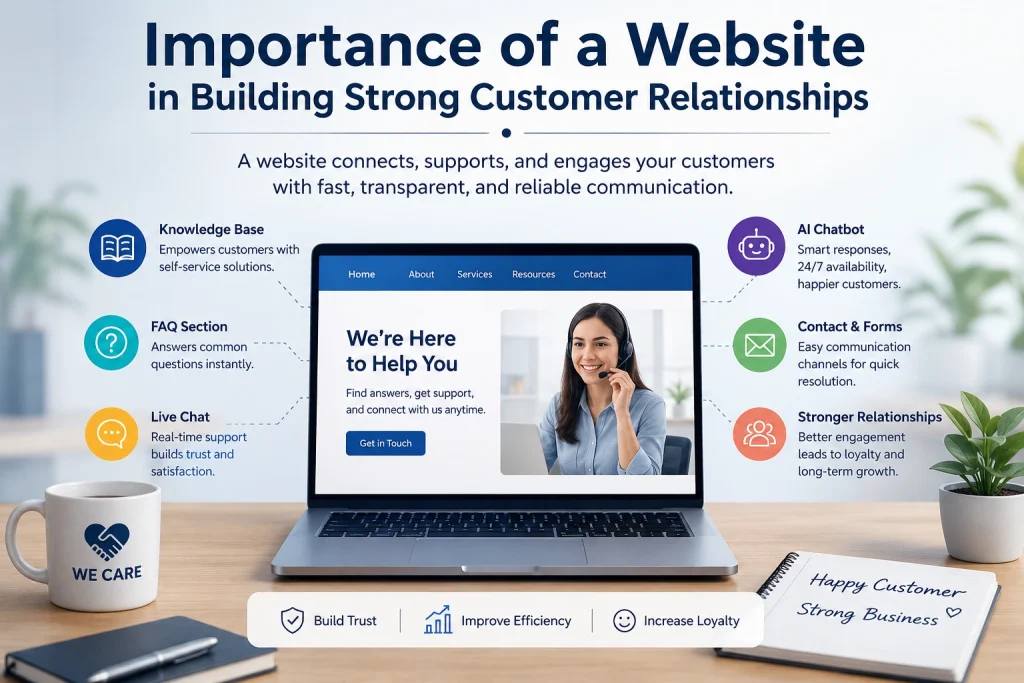
Modern corporate environments require quick, transparent communication channels. Consumers are less inclined to wait for traditional return calls or slow email responses; they expect immediate access to information. A website serves as the ultimate communication clearinghouse, embedding tools that streamline engagement and eliminate friction.
Through the implementation of structured self-service ecosystems such as comprehensive Knowledge Bases and interactive Frequently Asked Questions (FAQ) , enterprises empower users to resolve their inquiries independently. This immediately reduces the burden on internal customer support teams.
For more complex inquiries, the integration of conversational AI tools and smart routing forms ensures that consumer queries are categorized and addressed efficiently, improving overall customer satisfaction and loyalty.
Democratizing the Competitive Landscape
One of the most powerful attributes of the digital economy is its capacity to level the playing field. Historically, market dominance was heavily tied to the scale of an enterprise’s physical footprint and marketing budget. Massive corporations could easily crowd out smaller, localized competitors through pure financial scale.
In the digital space, however, the quality of your platform and your strategic positioning matter far more than your corporate head count. An agile medium enterprise or local startup can build a highly optimized, fast-loading website that targets specific long-tail keywords or niche customer needs.
By executing a precise SEO and content strategy, a smaller business can outrank multi-billion-dollar conglomerates for highly valuable search queries, capturing premium organic traffic and positioning itself as a dominant authority within its specific niche.
Leveraging Data Intelligence and Analytics
A business operating without a website is essentially flying blind. They may track top-line revenue and broad sales volumes, but they lack visibility into the specific consumer behaviors, preferences, and motivations that drive those outcomes. A corporate website functions as an advanced data collection engine, yielding deep business intelligence. By leveraging modern analytics frameworks, an organization can systematically monitor a variety of critical performance indicators:
- Granular Demographics: Discovering the precise geographic locations, languages, and device preferences of the core audience.
- Behavioral Flow Mapping: Identifying exactly how users move through the site, which service pages attract the longest engagement, and where friction points cause drop-offs.
- Content Performance Audits: Tracking which insights, case studies, or product announcements generate real market engagement.
These insights eliminate guesswork from broader corporate strategy. Product development teams can refine offerings based on search demand trends, marketing teams can craft highly personalized campaigns, and executive leadership can make data-driven, strategic decisions that mitigate risk and accelerate growth.
Future-Proofing for Long-Term Brand Sustainability
With the development of technology, AI search, voice search and other digital innovations, the importance of a website is even more. A modern, fast, and SEO-friendly website helps businesses stay visible, adapt to evolving customer behavior and remain competitive.
A website is not a one-time investment, but a long-term digital asset. Maintaining and optimizing it can help businesses enhance their online presence, establish long-term brand authority, and secure long-term success in a dynamic digital environment.
Conclusion: A Strategic Imperative for Growth
A website is so much more than an online marketing tool or a digital business card. It is the foundation of modern business growth, enabling organizations to build trust, attract customers and create value over the long term. The many benefits discussed in this article, from stronger brand authority, improved customer acquisition, 24/7 accessibility, and data-driven decision-making,clearly demonstrate the importance of a website in today’s digital-first business environment.
As the global marketplace continues to be transformed by digital transformation, companies that do not have a professional online presence risk losing visibility, trust and valuable opportunities to competitors. Knowing the value of a website is no longer an option, it is a necessity for long term growth and sustainable success. By investing in a website that is high-performing, user-friendly and SEO-optimized, businesses can strengthen their brand, reach more customers and stay competitive in an ever-evolving online environment. Your website is not just another business expense. It is one of the smartest and most valuable investments you can make for your future.